
Colorado Voters Approve Graduated Income Tax: Year-End Planning Window Closes December 31, 2026
Publications - Client Alert | November 13, 2026Click here to download a PDF of this client alert.
Key Takeaways
- Effective date: Colorado’s flat 4.4% income tax rate will be replaced by graduated rates beginning January 1, 2027.
- Top rate: Taxable income over $1,000,000 will be taxed at 8.4%, while lower brackets will be taxed at or below the current rate.
- Action item: Taxpayers expecting significant income from a sale or other transaction should evaluate, before December 31, 2026, whether recognizing that income in 2026 is feasible and advantageous.
Colorado Amendment 87, approved in the November 2026 elections, replaces the state’s current flat 4.4% income tax rate with a graduated tax structure beginning January 1, 2027. This change may increase state income tax liability for higher-income individuals and businesses.
What is Changing? New Guaranteed Tax Rates
Beginning January 1, 2027, Colorado will implement the following graduated income tax rates. These are marginal rates: each rate applies only to the portion of taxable income that falls within that bracket.
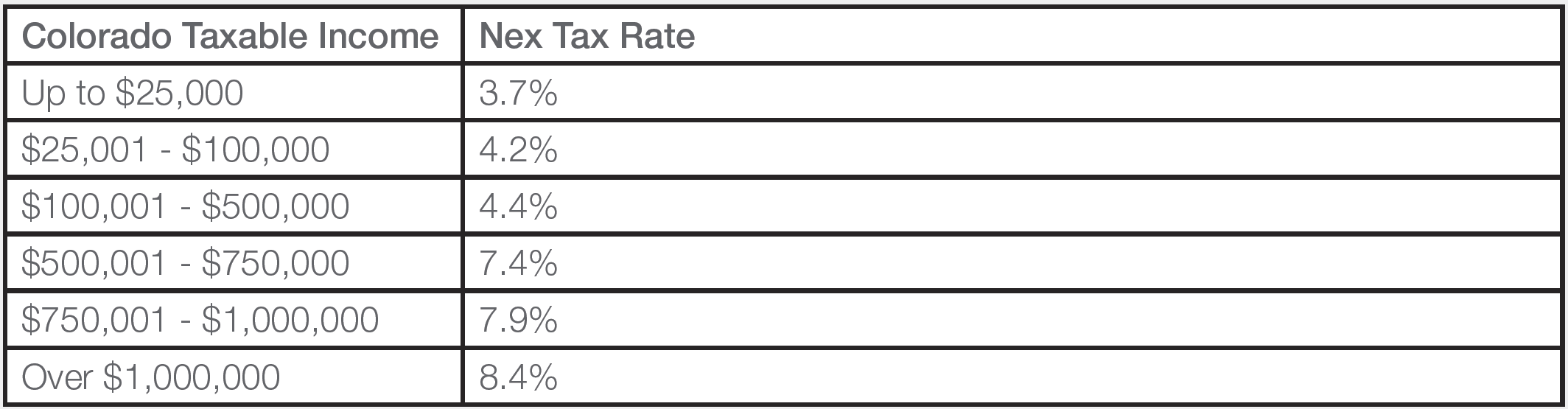
The new tax rates apply to individuals, trusts, estates and corporations. Income earned through entities taxed as partnerships or S corporations generally passes through to the owners, who may face higher individual tax rates regardless of whether the income is distributed.
Impact of New Rates on Transactions
Assume the sale of a business generates $3 million in Colorado taxable income, and that this is the taxpayer’s only income for the year (disregarding other state adjustments and credits). Under the current 4.4% rate, the transaction would result in approximately $132,000 in state income taxes. Applying the new marginal rates, the Colorado tax liability would increase by approximately $96,000, to approximately $228,000 for the same transaction. Actual results will vary based on each taxpayer’s circumstances.
Transactions That May Warrant Immediate Review
Transactions to consider include:
- Business Sales and Ownership Transfers: Business owners contemplating the sale of a business, membership interests or stock should evaluate whether completing the transaction in 2026 could reduce state tax liability (as compared to expected tax liability in 2027 and thereafter).
- Real Estate Sales: Those considering the sale of investment or commercial real estate should evaluate the timing of the sale and whether recognizing the gain in 2026 would reduce their tax liability (as compared to expected tax liability in 2027 and thereafter).
- Investment and Capital Gains: Investors anticipating significant capital gains from appreciated stocks, private investments or other assets should consider the timing of those transactions before the new rates take effect.
Important Considerations Before Accelerating a Transaction
- Timing of income recognition: Closing a transaction in 2026 helps only if the income is actually recognized in 2026. Installment sales, escrows, holdbacks, earnouts and other deferred or contingent payments may cause some income to be recognized in 2027 or later, and therefore subject to the new rate structure.
- Substance over form: A transaction structured or documented to close in 2026 solely to avoid the new rates, without a genuine transfer of ownership and risk, may be challenged by taxing authorities.
- Business considerations: Accelerating a closing may affect diligence, pricing, financing and other deal terms. Tax savings should be weighed against these considerations.
- Other planning options: Depending on the circumstances, alternatives such as Colorado’s pass-through entity tax election, like-kind exchanges, Qualified Opportunity Zone investments, or changes in residency may also be relevant.
- Pending implementation guidance: Many details of how Amendment 87 will be implemented, including how the new brackets will apply to particular taxpayers, transition rules, and any related legislation, regulations or Colorado Department of Revenue guidance, have not yet been issued. Additional information from the State will be needed, and planning decisions should be revisited as that guidance becomes available.However, any new rules, legislation, regulations, and/or guidance are expected to follow the graduated and increased rate structure in the table set forth above.
Individuals and businesses anticipating significant income or transactions in 2026 or 2027 should consult with their tax and legal advisors as soon as possible to determine whether accelerating a transaction is feasible and financially advantageous.
How Kutak Rock Can Help
Kutak Rock’s tax and transactional attorneys are available to help evaluate the effect of Amendment 87 on planned transactions and to assist with year-end planning. For more information, please reach out to your regular Kutak Rock contact.